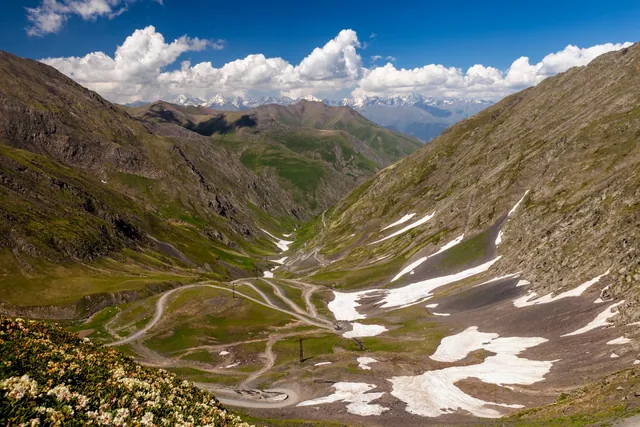

Gomis Mta: how to get there by car and what to expect
How to drive to Gomis Mta from Tbilisi, Batumi and Kutaisi: routes, road conditions, when to go for the cloud sea, and what to pack. A practical guide.
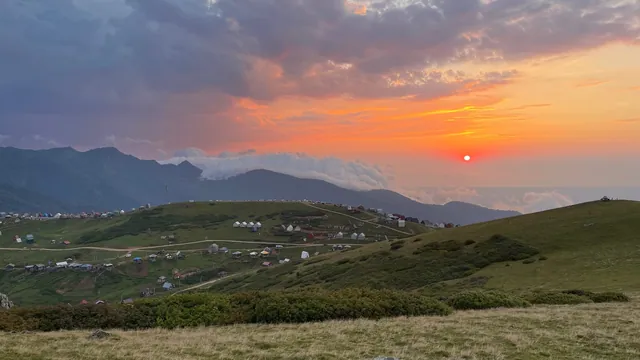
Gomis Mta is a mountain resort in the Guria region at 2,100–2,755 m above sea level. The main reason people drive up here: a cloud sea under your feet. You climb through the forest, punch through the cloud layer — and suddenly a white sea drops away below while a clean blue sky opens overhead. One of the most memorable moments in western Georgia, and absolutely doable as a day trip — though staying overnight is much better.
Getting there: routes from different cities
The resort is 33 km from Ozurgeti — the administrative center of Guria. Every road leads there first, and only then up the mountain.
The road from Ozurgeti to the resort has been resurfaced: fresh pavement, a comfortable drive. Any car can make it all the way to the resort.
From Tbilisi
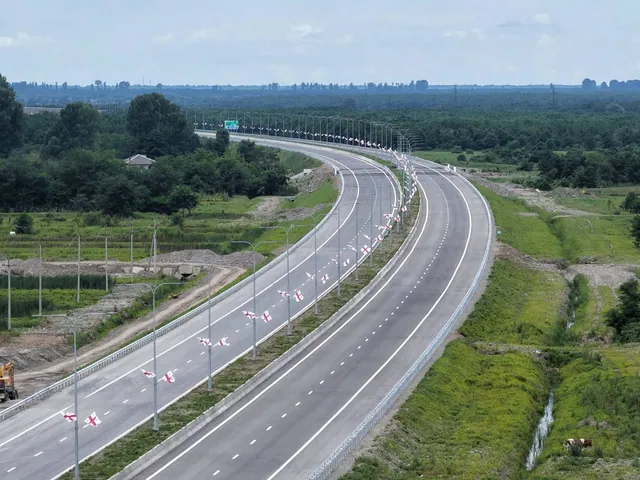
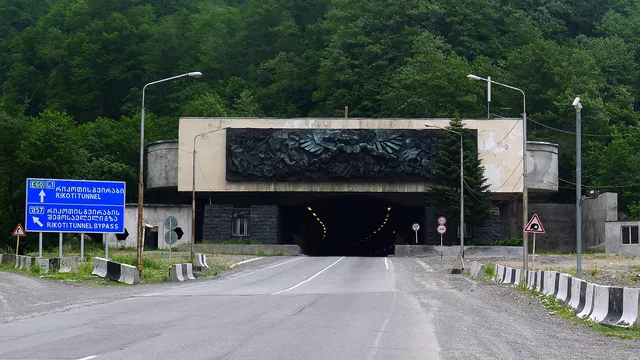
Distance — about 350 km, driving time — 4.5–5 hours. Route: highway E60 / S1 west toward Kutaisi, then S2 south to Ozurgeti, then 33 km up to the resort. Most of the way is a modern expressway — comfortable and predictable.
From Batumi
Distance — about 120 km, time — 2–2.5 hours. The route runs through Kobuleti and Lanchkhuti to Ozurgeti, then up the mountain. From Batumi, Gomis Mta works perfectly as the first stop on a trip inland — the drive is short, and the contrast between sea level and the 2,000 m mountain air hits especially hard.
From Kutaisi
Distance — about 100 km, time — 1.5–2 hours. Straight south on S2 to Ozurgeti, then into the mountains. The shortest option of the three cities.
If you're traveling in a rental car and planning a western Georgia loop, Gomis Mta fits neatly into the route: Tbilisi → Gomis Mta → Batumi, or the other way round. It adds almost no extra time, but the experience is completely different.
Roads: what car you need
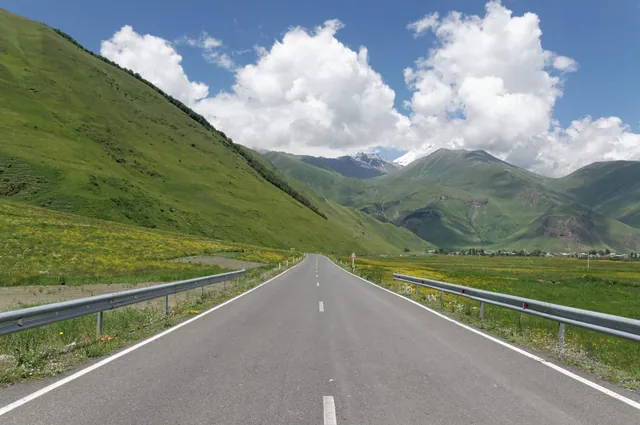
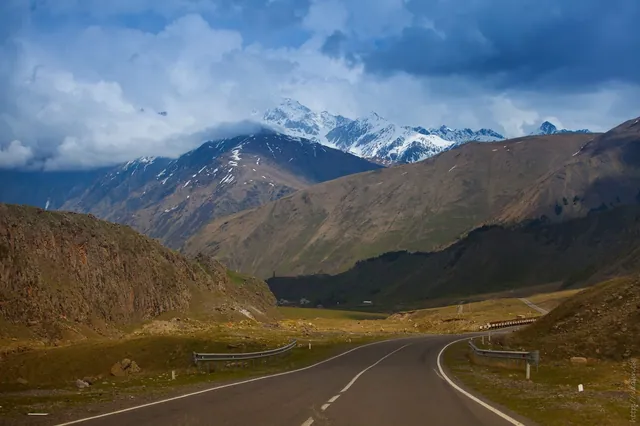
Any car will get you to the resort. After the resurfacing the road is in good shape, the switchbacks are gentle — nothing extreme.
We drove up in a regular rental sedan — no 4WD, no extra ground clearance — and never regretted it. Fresh asphalt holds almost to the top; you rarely need to pass anyone. 4WD isn't for “getting to the resort” — only if you plan to go further beyond it.
Beyond the resort: Chinchao and the jeep track to Bakhmaro
Chinchao Lake is a volcanic lake about 12 km from the resort, at around 2,500 m. This is no longer a “drive up and get out” stop: the road crosses open pastures and needs 4WD and dry weather — after rain, better stay away. The reward is a quiet high-mountain lake with almost no people. In a rental sedan, leave Chinchao for another trip with an SUV.
The Bakhmaro–Gomis Mta jeep track (~25 km) also needs 4WD: real off-road across summer pastures, not a place for a regular car.
In winter the road to the resort isn't cleared. Snow can reach several metres — driving through is practically impossible. Don't risk it without serious preparation.
What the resort is actually like
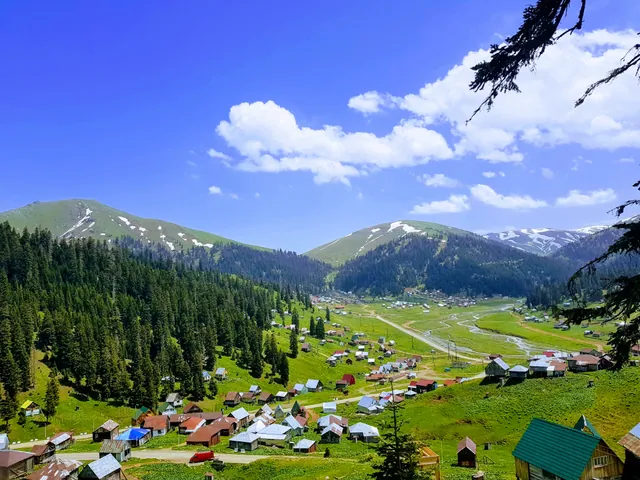
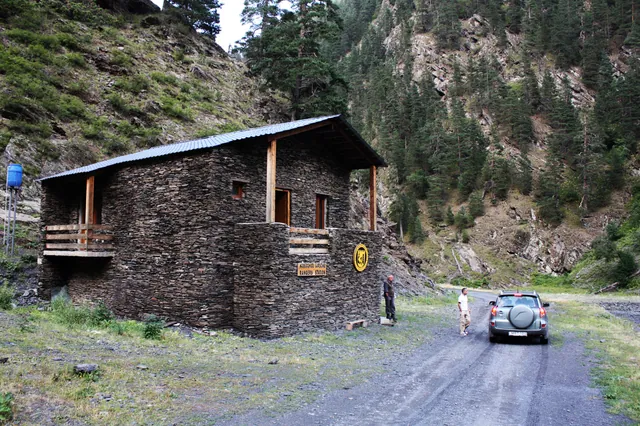
No hotels. No restaurants. No pharmacy. No shop. Gomis Mta is a climate resort that deliberately stayed off the grid — and that's exactly why people come. Wooden cabins are scattered across the slopes, most of them private, some rented out in summer. A few local families sell fresh dairy — homemade cream, cheese, milk. If you find any, take it: breakfast on the mountain becomes something else entirely.
The feeling of the first morning here is hard to put into words: you walk down to a neighbour's cabin for milk, half the slope is still under cloud, and sounds arrive as if through cotton. This isn't a “half-hour sight” — people come here to slow down.
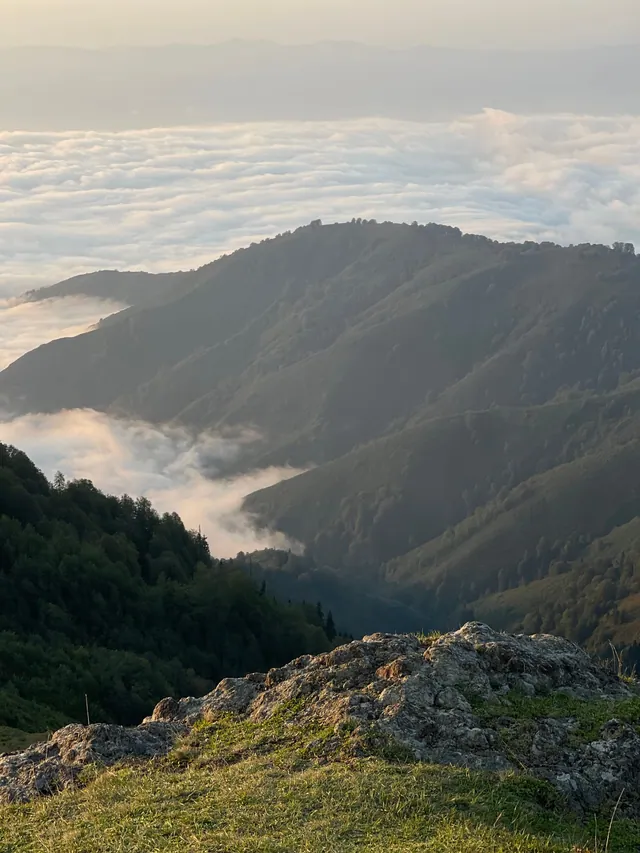
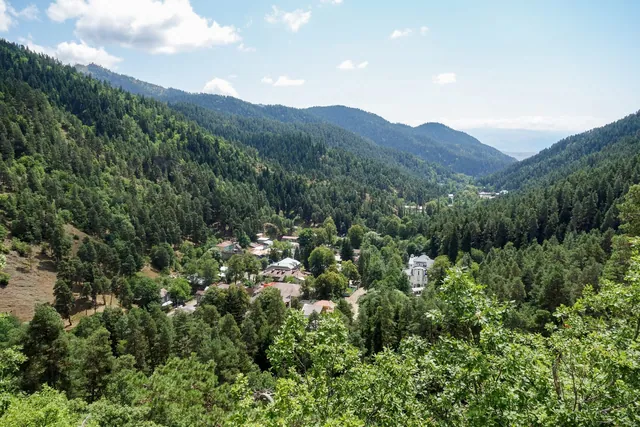
The resort sits on the edge of the forest. Below — dense mixed woodland; above — open alpine meadows, rhododendron thickets, and on a clear day a view all the way to the Black Sea coast. The air really is a mix of mountain and sea; people have been coming here for their health for decades.
Day trip or overnight?
As a day trip it works from Batumi and Kutaisi: 2–2.5 and 1.5–2 hours one way, leave at dawn — and by midday you've already seen the cloud sea and walked the meadows. From Tbilisi in one day it's tough: 9–10 hours behind the wheel for a few hours on top. Only worth it if you're already in transit toward Batumi.
With an overnight the resort opens up properly: evening quiet, cold air, stars without light pollution, and a morning with clouds below — almost impossible to catch if you start from the city in the morning. Sleep in a tent (wild camping is normal here) or a cabin arranged with locals. One night is the sweet spot; two already need a plan for what to do, unless you're heading on to Bakhmaro or Chinchao.
A solid two-day plan: Tbilisi → Gomis Mta (overnight) → Batumi. Two regions, three landscapes, all of it in your own car at your own pace.
When to go
- June–September — main season. The cloud sea (clouds below the ridge, summit in clear sky) is steadiest early in the morning. Daytime 15–22 °C, nights are cold — bring warm layers even in July.
- October — the forest turns gold and russet. Fewer people, quieter. The road is still passable.
- November–May — the resort is effectively closed. Deep snow, the road isn't cleared, you can't get through.
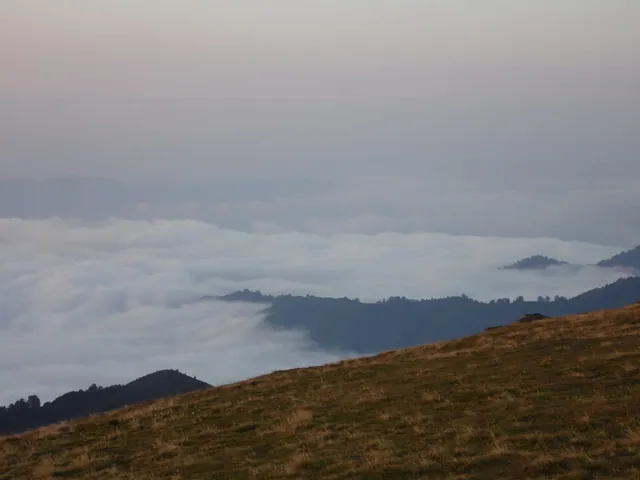
In our experience, the cloud sea is steadiest in the first hours after dawn. Leave Ozurgeti before light and be on top by 7–8 a.m. — your odds of seeing clouds under your feet are much higher than if you arrive at midday. Aim to be on the summit by 10 a.m.; after noon the clouds often break up.
What to bring
There are no shops or infrastructure at the resort — plan ahead:
- Food and water for the whole stay. There are mountain springs, but don't rely on them alone.
- Warm clothes. Even in July evenings can drop to 8–10 °C.
- Cash. Cards aren't accepted anywhere nearby.
- Offline maps. Signal at the top is unreliable.
- A tent or a cabin arrangement. Wild camping is common and bothers no one. Cabins are best found through locals in Ozurgeti or Georgian travel communities — there's no single booking system.
- Firewood or a gas stove. Evenings are cold enough that heat matters.
In practice the most common guest mistake isn't the tires or the road — it's supplies: arriving without cash, without spare water, and with a phone that barely gets signal up top. Pack as if you're heading into the field for a day on your own — and the “spartan” resort turns “cosy”.
Gomis Mta or Bakhmaro?
Both are high-mountain climate resorts in Guria with a similar character: no hotels, built for quiet and air. The difference is access and mood.
Gomis Mta — asphalt almost to the top, any car can make it, fewer people. Bakhmaro is better known, with stilts cabins; the approach via Chokhatauri also works in a regular car — but it's busier in season. Between them: ~25 km of jeep track for 4WD only.
Simple logic: want high country without an SUV and without crowds — Gomis Mta; want classic Guria with a slightly more settled feel — Bakhmaro.
Nearby logistics:
- Ozurgeti — nearest town with cafés, fuel, ATMs and a market.
- Batumi — about 100 km from Ozurgeti, a convenient end point if you're driving one way.
Practical tips for the road
- Leave Tbilisi early — ideally around 7 a.m. For the cloud sea, aim to be on top between 7 and 10 a.m.; after noon the effect weakens.
- The last 33 km from Ozurgeti take about 40 minutes — the road is new, but switchbacks are still switchbacks.
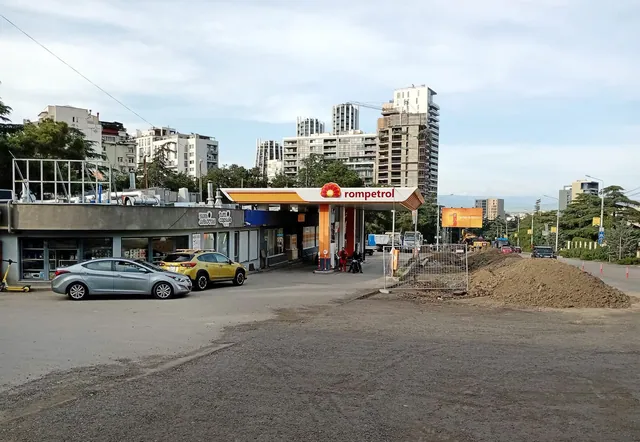
- Fill up in Ozurgeti. There are no petrol stations after it.
- In rain, slopes above the resort can be slippery — wear non-slip shoes for walks.
- Check the places map on our site — key points on the western Georgia route are marked there.
Bottom line
Gomis Mta is a place with minimal infrastructure and maximum payoff: no crowds, no souvenir stalls — just forest, a cloud sea, and cold air. Easy to slot “along the way” into a western Georgia route rather than as a separate expedition: a detour from the highway costs about half a day, but the landscape contrast feels like a trip of its own.
If you need a car for several days — MY.DRIVE allows intercity trips without hidden terms, and support actually answers like a human.